
The Physiology of Healing: Why Herbs Work for People and Animals


Did You Know?
Herbal medicine is one of the oldest forms of healthcare in the world. Archaeological findings suggest humans have been using plants medicinally for over 60,000 years. Ancient civilizations—from the Sumerians and Egyptians to the Chinese and Greeks—built intricate systems of medicine based on plant observation, often passed down for generations.
These systems were not based on superstition, but on empirical results: using plants that interacted with the body’s physiology to restore balance, regulate organ function, and strengthen vitality.
Understanding Chronic Illness: A Systems Biology Perspective
Chronic conditions like insulin resistance, arthritis, hypothyroidism, fatigue, metabolic syndrome, laminitis, or autoimmune patterns in humans and animals aren’t isolated "diseases." They are signs of systemic dysregulation—a breakdown in communication and function across one or more biological systems.
For example:
Insulin resistance is not a sugar issue—it’s a cellular signaling issue. Chronically elevated insulin due to processed foods or stress causes receptor down regulation, mitochondrial dysfunction, and chronic inflammation.
Joint degeneration and arthritis are rarely isolated to age. They involve chronic inflammation, oxidative stress, poor collagen repair, and in some cases, microbiome dysbiosis.
Autoimmune conditions are often triggered by gut barrier dysfunction (“leaky gut”), molecular mimicry, or unresolved immune responses to infections, toxins, or even vaccine adjuvants.
In horses, laminitis and metabolic dysfunction often stem from high-sugar forage, mineral imbalances, or dysregulated cortisol—yet it’s often treated as a hoof issue alone.
The takeaway? Symptoms are consequences, not root causes. And suppressing symptoms with medication does not restore function.
What Conventional Approaches Miss

While pharmaceuticals can block or manipulate a specific biochemical pathway (like NSAIDs reducing prostaglandins to lower inflammation), they rarely address why that pathway was overactivated in the first place.
Take a common example: A person with joint pain takes ibuprofen. This blocks the COX-2 enzyme and lowers inflammation. But it does not repair cartilage, correct dietary omega-6/omega-3 imbalances, reduce advanced glycation end products (AGEs), or support mitochondrial repair in damaged tissue.
The same principle applies to veterinary care. For a horse with metabolic syndrome, a vet may recommend a low-carb feed and medications—but few will address liver detoxification, the stress-hormone connection, or herbal support for pancreatic beta-cell resilience.
Herbs as Functional Nourishment: How They Work
Herbs do not act like drugs—they support physiological function through multiple mechanisms:
1. Adaptogens (e.g., ashwagandha, tulsi, rhodiola)
Regulate the HPA axis (hypothalamic-pituitary-adrenal system)
Improve cortisol rhythm and stress resilience
Protect mitochondria and enhance energy production
2. Hepatic and Lymphatic Support Herbs (e.g., dandelion root, burdock, milk thistle)
Increase phase I and II liver enzyme activity
Enhance bile flow (important for fat-soluble toxin elimination and hormone balance)
Support the lymphatic system in clearing cellular waste
3. Anti-inflammatory and Antioxidant Herbs (e.g., turmeric, ginger, nettle, pau d’arco)
Modulate inflammatory pathways like NF-kB, COX-2, and TNF-α
Provide polyphenols, flavonoids, and alkaloids that reduce oxidative stress
Scavenge free radicals that damage tissues and DNA
4. Hormone Modulators (e.g., vitex, licorice, shatavari)
Support hormone receptor sensitivity
Balance estrogen/progesterone/testosterone ratios
Influence the endocrine system gently without synthetic disruption
5. Nutritive Tonics (e.g., alfalfa, nettle, oatstraw)
Provide trace minerals like magnesium, calcium, potassium, and iron in bioavailable forms
Rebuild depleted tissues and restore electrolyte balance
Nourish adrenal and nervous system tissues
What Is Functional Medicine—and Why Does It Matter?
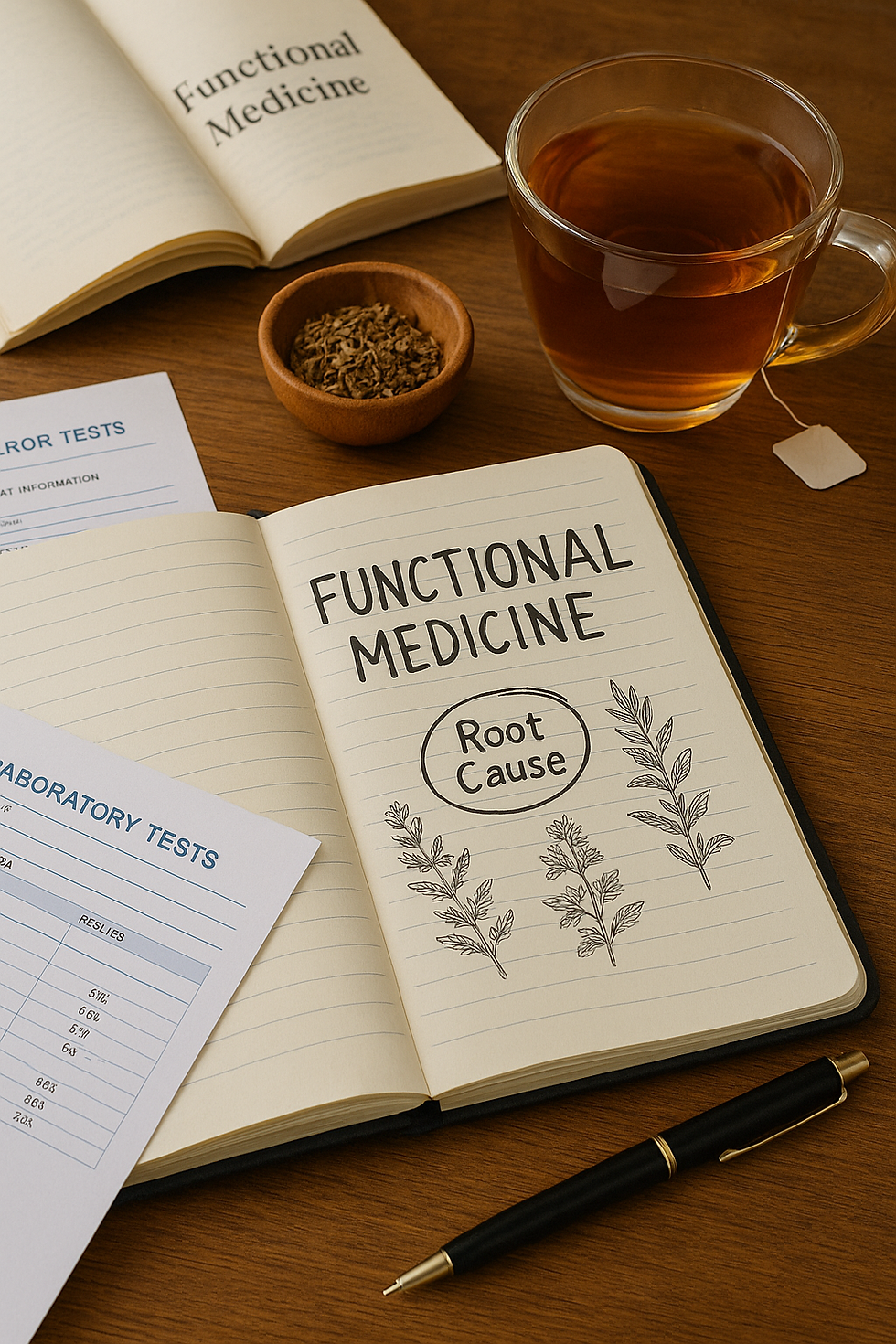
Functional medicine is a model that looks at the body as an interconnected system rather than a set of isolated organs. It integrates genetics, epigenetics, lab testing, nutritional science, and systems biology to understand why disease occurs—and how to reverse it.
In functional medicine:
A thyroid issue may be seen as a gut-liver-adrenal imbalance, not just a hormone problem
A skin rash might be a sign of microbial imbalance, histamine overload, or liver congestion
Anxiety could stem from poor methylation, trauma, blood sugar fluctuations, or nutrient deficiencies
This approach is not anti-medical—it simply goes deeper. It seeks to restore optimal function, not just manage dysfunction.
The Evolving Medical Landscape
It is important to note that perspectives on herbal medicine are shifting. More allopathic doctors and veterinarians are now integrating evidence-based herbal therapies into their practices. Research into herbs like turmeric (curcumin), berberine, milk thistle (silymarin), and licorice root is helping bridge the gap between traditional healing and modern science.
This evolving integration allows for more collaborative, personalized care—combining the best of both worlds. Important Note on Safety. While herbs offer incredible support for systemic healing, they are not without complexity. Many herbs can interact with conventional medications—either by enhancing their effects, reducing their absorption, or altering how they are metabolized by the liver (particularly via cytochrome P450 enzymes). If you or your animals are currently taking medications, it’s essential to work with a qualified herbalist or integrative practitioner. This ensures that your herbal choices complement, rather than conflict with, your existing treatment plan.
Herbs are powerful tools—but they must be used wisely.
Why I Do This Work
I’ve been immersed in holistic wellness my entire life. I’ve watched people and animals transform—sometimes after years of unresolved symptoms—through proper herbal support and foundational lifestyle shifts. I’ve seen individuals reduce or eliminate medications. I’ve seen horses return to soundness. I’ve seen animals and people come alive again when we stopped chasing symptoms and started feeding the root. Science is important. But so is experience. And sometimes the most profound healing happens when we step outside the box and trust what the body already knows.
Because true healing is never one-size-fits-all. It’s personal. It’s patient. And it’s always possible.
If you’re ready to explore a different way—one that nourishes your body, your animals, and your future—start with the root.Explore our herbal blends, book a consultation, or reach out with questions. Because functional healing honors the whole being—mind, body, and spirit.
With love, health, and herbs,
~Debbi, Wholehearted Harmony


Comments