
Why "Herb Testing" became the Phytosomatic Integration Method™


From Herb Testing to PIM™
Why I Couldn’t Stop at the Easy Answer
I never set out to create a methodology. I was trying to help horses, and that really is where this story begins.
Long before the Phytosomatic Integration Method™ had a name, I was doing something I simply called herb testing. Some of you who have followed Wholehearted Harmony for a long time may remember it. You may have had me come out and test your horse, or you may even have purchased one of the herb-testing kits that used to be available on my website.
Back then, what I had been taught to look for was fairly simple. A horse could show interest in a botanical, avoid it, or give what was considered an even stronger “yes” through licking, chewing, or yawning. For the first few years, those were the responses I watched for because those were the responses I understood to watch for. And then the horses started teaching me that the story was much bigger than that.
I began noticing things that did not fit neatly into the simple yes-or-no language I had been using. A horse might lick and chew, but at the same time the ears were pinned back. Another might yawn while the eyes became heavy. A tail might start swishing. Breathing might change, posture might change, muscle tone might change, or the horse might suddenly become very still.
The more horses I worked with, the harder it became to call one response “positive” without paying attention to everything else happening around it. A lick and chew could be part of the response, but it was not necessarily the whole response. That realization changed the way I watched.
Instead of waiting for a horse to give me one of a handful of familiar signs, I started paying attention to the entire body. I watched what the horse looked like before the botanical was presented, what changed as the horse smelled it, and what happened after I moved it away. I started noticing the eyes, ears, mouth, breathing, posture, muscle tension, movement, stillness, weight shifts, attention, tail, and the relationship between one response and another. I began seeing combinations of responses that did not make sense if I looked at each sign separately.

Over time, I started developing my own language for what I was observing, and I began studying somatic communication on a deeper physiological and biological level. I was not simply interested in whether a muscle moved or whether an animal performed a particular behavior. I wanted to understand how the body itself communicates through changes in physiology and expression.
The horses had been communicating all along. I was simply learning how much I had been missing. Somewhere during that early period, while researching what I was already doing, I came across Applied Zoopharmacognosy. I remember thinking, Oh my gosh, herb testing is actually a thing. There was enough overlap that for a while I used that term alongside herb testing because it seemed to give language to something I was already experiencing.
But as my own work developed, I became increasingly uncomfortable using it to describe what I was doing. Applied Zoopharmacognosy involves animals ingesting herbs, clays, and essential oils, with those substances then being offered or used based on the animal's selection. The more I learned, especially through my herbal education, the more I struggled with the idea that a response to a botanical automatically meant that botanical should simply be given afterward.
Olfactory response and ingestion are not the same thing. If a horse responds strongly to the scent of peppermint, that does not automatically mean that feeding peppermint for the next several days is going to address the biological reason the horse responded to it. The response matters, but the response is information. It is not automatically a treatment plan. That distinction became more and more important as I continued my education in herbalism.
As I moved toward becoming an Advanced Master Herbalist, my understanding of plants changed tremendously. An herb could no longer simply be “the herb the horse liked.” I was learning about chemistry, plant constituents, actions, tissue affinities, energetics, nutritional components, contraindications, botanical relationships, and the way one plant can behave very differently depending upon what it is paired with and what the body is actually trying to accomplish.
That changed the questions I was asking, instead of only asking which botanicals the horse responded to, I began asking why the body might be responding to those particular botanicals together. I wanted to know what connected them, what systems they influenced, what biological patterns were showing up across the assessment, and whether those patterns made sense when I looked at the whole horse.
The assessment started becoming the beginning of the story instead of the end of it.
Then I began carrying my own herbal line, and that changed things again. By that point I was working with hundreds of horses, and there is something that happens when you see enough individual animals over and over again. You begin noticing patterns, contradictions, recurring relationships, and responses that no textbook could ever show you in quite the same way.
I could also follow what happened after the assessment. That mattered enormously because now I was not simply recording which herbs received a response. I could take the assessment, apply my herbal education, look at the biological relationships between the botanicals, consider the horse's history and foundation, and create support around a larger objective.
This is where my master formulations really began to make sense. Instead of saying, “The horse responded to these six herbs, so let's give these six herbs,” I could ask what those six responses might be showing me collectively. I could evaluate the pattern and formulate around the biological objective rather than around a list of individual plants. That was a completely different way of working.
For years, I also sold herb-testing kits through my website. At the time, it made sense to me because I wanted people to have access to what I was seeing and experiencing.
Eventually, though, I reached a point where I could not continue doing that.
Some people bought the kits and hardly used them. Some tested their horses and then purchased the herbs independently. Some took the horse's botanical selections as the answer and simply began giving those plants.
The problem was not that the horse had not communicated something valuable. The problem was that the assessment information was being separated from the herbal education and biological interpretation that I had learned were necessary to understand what came next and I eventually realized that I had been selling people the collection tool without being able to give them everything they needed to understand what the tool was showing them. That did not sit well with me anymore.
So about two years ago, I removed the kits from the website. For a while, I simply did the assessments myself locally because I would rather take responsibility for the entire process than continue offering something I no longer believed should stand alone.
That decision was part of a much bigger change happening inside Wholehearted Harmony. By then, I had become very clear about what “root cause” truly meant to. In my experience, probably 95 percent of what I see described as holistic or root-cause work still stops far too early.
And yes, while sometimes medication is necessary, supplementation is necessary and even conventional care is exactly what is needed, but what happens when the horse is still struggling? What happens when the dog has been through product after product and something still is not right? What happens when a person has been given another medication, another supplement, another diet, another explanation, and their body is still telling them that the story is not finished?
Very often, those are the people who find me. I am not always the first person they call. Quite often, I am the person they come to after they have already tried many of the things they were told should work. That responsibility has shaped Wholehearted Harmony more than I think people realize.
It made me unwilling to stop asking questions just because we had an acceptable answer. It made me look harder at biological foundations, species appropriateness, nourishment, environment, nervous-system regulation, digestion, inflammation, adaptation, compensation, and the way all of those pieces influence one another. It is also why my herbal blends look the way they do.
I am not interested in throwing herbs into a formula because they have a reputation for being “good for” the symptom printed on the label. I want the formula itself to make biological sense. The same thing happened with the assessment.
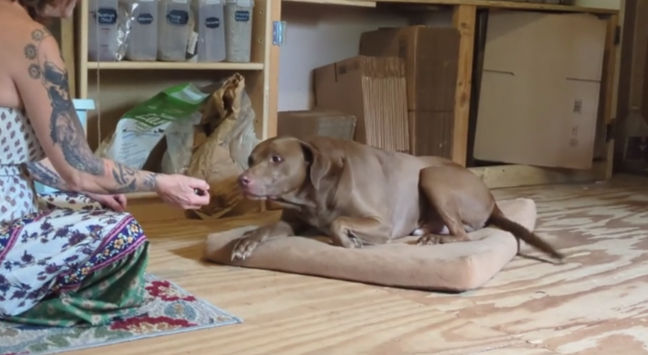
What began with horses eventually expanded into dogs, and that opened my eyes again. Dogs expressed themselves differently, but the underlying biological communication was still there. Their bodies responded, adapted, compensated, regulated, and communicated in ways that could be observed if I was willing to look beyond the obvious response.
Then humans became part of the work and in some ways, humans make this more complicated because we have words. We can tell you what we think is wrong. We can research our symptoms, diagnose ourselves, explain our history, and arrive with years of ideas about what our bodies are doing, but underneath all of that language is still a

body.
There is still a nervous system, digestion, circulation, immune activity, endocrine signaling, tissue response, adaptation, compensation, and biological communication. The species changes, the expression changes, and the way I approach the assessment has to respect that, but biology is still there.
That is when the bigger picture really came together for me. The method was never going to belong only to horses because what I had been learning was not simply about horses choosing herbs. It was about living bodies responding to botanical input and what those responses could reveal when they were observed as part of a much larger biological story.
Eventually, distance became the next problem. I could only physically travel so far, and there were horses, dogs, and people who wanted this kind of assessment but lived nowhere near me. By then the process had become structured enough that I realized I did not necessarily need to be the person physically holding the botanical.
I needed to be able to see the response.
That is how virtual assessment began. An animal's owner could become my hands while I guided the presentation and watched the body. A human participant could present the botanicals themselves while I observed the response, listened to their internal report, and documented what was happening.
Virtual assessment allowed the work to travel in a way I physically could not.
And once that became possible, another idea started taking shape. If I could train someone to collect the assessment properly, then there could be trained eyes and hands in places where I simply could not be. That is where the PIM™ Assessment Specialist courses eventually came to fruition.
The courses were never meant to recreate the old herb-testing kit model. I had already learned why that was not enough. I wanted Assessment Specialists who understood how to present botanicals consistently, establish a baseline, observe the whole body, document what changed, recognize when responses were mixed or complex, and collect the biological story accurately. They can be where I cannot.
Wholehearted Harmony can then take that information farther. By the time all of this had happened, calling what I was doing “herb testing” no longer felt accurate. Too much had changed. The botanical presentation had become more structured. Somatic biological communication had become central to the assessment. I had developed my own observational language and standards. The assessment had become connected to biological pattern recognition, professional documentation, herbal interpretation, and formulation.
It needed its own name because it had become its own method. That is how the Phytosomatic Integration Method™ came to be. Phyto represents the botanical world. Somatic represents the communication of the body. Integration reflects the fact that I do not want to isolate one response, one plant, one symptom, or one system from everything else happening in the body. I trademarked PIM™ because if something is going to be called PIM™, it needs to actually be PIM™.
Other people can present herbs. Other people can work with botanical self-selection or observe animals. There is nothing wrong with that, but it does not make those methods the Phytosomatic Integration Method™. PIM™ has its own structure, its own language, its own assessment process, its own standards, and its own relationship with Wholehearted Harmony.
Looking back, I do not think herb testing was a mistake at all. It was the door I had to walk through. It taught me that horses were communicating far more than most of us were noticing. The horses then taught me that I needed to watch more carefully. My herbal education taught me that botanical response was not enough on its own. Dogs taught me that the same kind of biological communication could look completely different while still being meaningful, and people added an entirely new layer by bringing verbal report into the conversation.
Every stage forced me to learn more and that has not always been easy. Being different is hard, especially when it would be much easier to use the same language as everyone else, sell what everyone else is selling, formulate the way everyone else formulates, or stop asking questions once an answer sounds reasonable enough.
But I have never been very good at doing that when the body in front of me is still struggling.
Wholehearted Harmony has been built around one belief that has become stronger with every horse, every dog, every person, every formulation, and every assessment I have done: the body deserves to be understood before it is simply managed.
Nobody should be ignored because their story is complicated. No animal should have everything it is communicating reduced to one symptom, one behavior, one test result, or one convenient explanation. And no person should automatically be expected to accept that feeling unwell is simply their new normal without anyone continuing to ask what else may be happening. I want to help the body heal itself. That has always been the point.
It is why I look through a biology-first lens. It is why species appropriateness matters so much to me. It is why food and foundation matter. It is why my herbal formulations are built around biological objectives instead of lists of symptoms, and it is why I kept changing herb testing even when it would have been much easier to leave it alone.
The mission did not change, the method had to grow enough to meet it a
and when a horse, a dog, another animal, or a person is still asking for help after the obvious answers have failed, I believe we owe that body more than another quick answer.
We owe it our attention. We owe it our curiosity. And sometimes, being willing to do things differently is exactly what allows us to finally see what everyone else has been missing.
Visit the PIM™ page for more information and pricing
Check out the PIM™ Assessment Specialists courses
With love, herbs and harmony
Debbi - Advanced Master Herbalist
Wholehearted Harmony


Comments